Richmoose Casino Terms Glossary

Richmoose reads like a brand where the vocabulary deserves close attention. Rather than treating casino terms as decoration, a reader can use them to understand how banking, bonuses and withdrawal rules fit together. That is especially useful when a page uses familiar phrases that hide very specific conditions. The most helpful comparison is not about style, but about what each label really controls: access, timing, eligibility and the route money follows once play is over. A glossary-minded review makes those differences easier to spot.

For a terms-focused casino article, Richmoose is best read as a place where the labels matter as much as the game selection. The brand appears to operate with a Maltese licence reference in the background, and that usually means a reader should pay attention to how banking, bonus wording and eligibility are phrased rather than assuming every term is obvious. Currency, withdrawal timing and the route money takes back to the original method can all change the practical experience. That makes a glossary-style view useful, especially for anyone comparing sites in Canada and trying to understand what each term really means in context.

Términos que conviene revisar

  • La palabra “bono” suele incluir condiciones de uso que conviene leer antes de valorar su atractivo.
  • “Método original” significa que el retiro puede volver por la misma ruta usada para depositar.
  • Cuando aparece una cartera electrónica, suele importar la velocidad de pago más que la de ingreso.
  • Un límite diario o mensual puede pesar más que la cantidad visible en una sola retirada.
  • Las reglas de juego responsable y exclusión suelen afectar tanto al acceso como a las promociones.

Before any decision about the site itself, the strongest habit is to check what the terms actually mean in practice. A phrase such as “welcome bonus” can cover several moving parts, while a banking label may hide limits, matching rules or a requirement to use the same route for a later payout. Richmoose also appears to use euro-based accounting, so readers should verify whether the displayed values are in euros and whether that affects deposits or withdrawals. The brand’s published wording should clarify whether cards, transfers, electronic wallets and vouchers are all available in the reader’s location, and whether any method is restricted. For that reason, Richmoose is the place to confirm the exact definitions, because the same term can carry different consequences depending on the page and the region.

A useful way to approach the brand is to separate the marketing language from the operational language. Welcome offers, for example, tend to sound simple until the attached conditions are checked. Banking language can be equally dense: card, bank transfer, electronic wallet and voucher are not interchangeable in practice, even when they sit in the same cashier area. The safest reading is to treat every label as a prompt to verify details on the target page, not as a promise. In that sense, {{ANCHOR}} becomes relevant because the brand page should confirm the exact wording behind the familiar casino phrases.

Datos que cambian la lectura

Qué revisar Dato publicado Por qué importa
Métodos de pago disponibles Tarjeta bancaria, transferencia bancaria, cartera electrónica y vale Indica si el usuario tiene rutas familiares para mover euros dentro y fuera del casino.
Condición principal del bono Requisito de apuesta de 25x sobre depósito y bono Muestra cuánto juego hace falta para que un saldo promocional tenga sentido práctico.
Velocidad de retirada Procesamiento interno en hasta 72 horas; luego hasta 3 días para tarjeta o transferencia, a veces instantáneo en carteras electrónicas Ayuda a separar la revisión del casino del tiempo real que tarda el dinero en llegar.
Límites de cobro Hasta 5.000 EUR al día y 20.000 EUR al mes Evita sorpresas si una ganancia supera el ritmo normal de retirada.

Puntos útiles para nuevos jugadores

  • Si aparece una oferta de bienvenida, el dato clave es la base del requisito de apuesta: depósito más bono.
  • El plazo de tramitación interna puede ser distinto del tiempo que tarda el dinero en llegar.
  • Las transferencias bancarias y las tarjetas suelen avanzar más despacio que algunas carteras electrónicas.
  • Un retiro solicitado antes de completar el juego mínimo puede quedar retenido hasta que se cumpla la condición.
  • Las expresiones “aprobado”, “procesado” y “pagado” no describen siempre el mismo momento.

Those same terms also help clarify risk. A site may allow deposits through several routes, but withdrawals can still follow the original payment path and may be reviewed before release. Bonus language can be even tighter, especially where the combined deposit-and-bonus balance must be played through 25 times before cash-out is considered. Anyone comparing Richmoose with another casino should look for those conditions first, because the meaning of the terms often matters more than the headline presentation.
Finding My Way Back Through the Internet

Half a year ago in Rome, my computer, with all my new work, all my addresses (land and computer), all my passwords, my study of Dante’s Inferno, a couple books, and my most beloved pajamas were stolen. My back-up disk was in the U.S.; I don’t use the Cloud; I had no way to retrieve my passwords; and I wasn’t headed home for months.

Over the following months, I tried to piece things back together on a borrowed computer. Worst was the loss of my new work – pages of a new memoir, which I still don’t know if I can replicate in the way I had written them. In a voice not tainted by frustration.

It’s taken me a long while to buy a new computer and begin to reestablish what I lost.

The strange thing is that in the mix of emotions I felt after the theft, one emotion during the ensuing past months has been a sense that I am lighter than I was before. I’ve felt freedom from the way the computer always wants more of me, wants me to scroll, and read useless clips of news, and order books and clothes, send photos and chat with friends, promote and market myself and my books.

My computer kept telling me to be important — and I’m not. I write poems, essays, and mysteries. Some people like my work, some don’t. I keep writing; I’ve found ways around the theft, but I’m also thankful that because of two thieves, I’ve gotten the monkey off my back.

The Writer and the Liminal State

I began my trip to Israel on a Thursday morning. After an easy two-hour shuttle ride to the airport, I checked my bag, breezed through security, and walked straight to the gate.  

Flight delayed…Flight cancelled.  Delta Help Desk handed me a coupon for a hotel that night and rerouted me on next day’s flight to Charlotte NC and from Charlotte to JFK, where I could catch the late-night flight to Tel Aviv.  

Alone for a month before the trip, I had been working hard to finish the third book of my Leah Contarini Mystery Series. During that month, I was at the computer every day, excepting an hour’s walk through the luscious cold of a Bear River Range winter and the hour it took me to shovel the daily snowfall from our driveway and sidewalks.

My work was done. I had been given a hotel room; I had a flight. I had no heavy luggage to wrangle.  I began to feel lighter. The weight of the previous month’s tension and tight muscles caused by the intense work of finishing the manuscript had dissipated and seemed inconsequential. I left the airport for the hotel feeling light and free. Free to let my mind roam. 

      The following morning, waiting outside in the crisp air for the shuttle back to the airport, I met a woman. She was an Hispanic woman from Miami, dressed in chic clothing. Her hair and makeup were professionally done, her glasses chosen to enhance her fine face, and she wore discreet gold on both wrists.  We were standing near each other at the top of the steps, staring out at the snow-covered mountains, when she turned to me and said, “This is the first time I’ve ever seen snow.” 

Since I was accustomed – winter after winter – to shoveling so much snow it made 6-foot walls down each side of our driveway, her words astounded me. Someone who had never seen snow!

I know of course that there are millions of people in the world who have never seen snow. But it had been a long time since I spoke with someone who was seeing it for the first time, and there was something in the way she was looking at the mountains that I couldn’t immediately identify. The significance of snow appeared to mean more to her than just the new experience of seeing it. 

I asked if she were moving to the West.  She hesitated, and as I waited for her response, I watched her face. She was worried. 

It turned out she was a semi-truck driver. Her usual route was Miami, Texas, Southern California, and back again, but she’d been reassigned. She was on her way to Montana where she would be driving a semi along a northern route, through the mountainous West. I let the thought sit. She had never seen and had never driven in snow.  She had left behind a world she knew and was on the way to a job, a potentially dangerous job. I felt a sudden protective sense toward her and wished I knew more about the sort of courage she possessed to take on that job.

I couldn’t have articulated it at the moment, but I had entered a liminal world. Like the people around me in the airport and on the plane, I had left but had not yet arrived.

A liminal world, simply put, is the place (physical, emotional, metaphorical) a person is during a transitional period. You are “inbetween”. If you’re an adolescent, you’re no longer a child, but you’re not yet an adult; if you’re a bride or a groom, you’re no longer single, but you’re not quite married.  If you’re an immigrant at a citizenship ceremony, you’re no longer an alien, but you’re not quite a citizen. 

It was with that woman’s story that I began to feel how all of us headed for the airport were in a liminal state. I thought of Chaucer. As travelers, all of us on our way to the airport and in the airport were in at the least, the liminal state of a traveler.  We were on the move: moving from airport to plane to airport to plane: situation left vs. situation anticipated. I’d left my American home and was going to my Israeli home. I was gone and yet not arrived.  I had entered this liminal space by leaving a life in the American West and flying toward my very different life in Israel. 

Neither home nor home, hiatus:  not writing, no more orientation by my mountain surroundings and friends, and no more concerns, except basic physical necessities.  All I needed to do was float through the airport or sit on a plane and listen to other people in the same state. We were the modern version of Chaucer’s Canterberry Tales.  I was filled with the excitement of what I would discover in this liminal state.

What I discovered as I moved through the 2 ½ days of the trip were stories: love stories, stories of fear, stories of tragic loss; stories of divorce and reconciliation, stories of food, stories of yearning, stories of freedom children told by running and shouting in the airline hallways; stories about diets, stories about a beauty salon, stories about living in Jerusalem, stories about terrible illness, stories of a loved-one’s death. 

I was floating through the world made small, with a motley crew, all of us existing between what was and what was to come. I listened to their stories; I told mine. I wanted to hear any story any one wanted to tell, and if I hadn’t yet articulated it, I now know that I was being offered a gift any writer desires:  stories laden with new understanding of what makes us human. 

We’re all homo narrans, shaping our lives as we travel.   

Forthcoming in Leah Contarini Mystery Series

Coming May 23, 2023: If Two of Them Are Dead, second of the Leah Contarini Mysteries, by Libi Siporin. The now-widowed Leah Contarini returns to the Tuscan village of Scansansiano and finds her beloved community beset with bizarre events. Shamus Award winner Greg Stout, author of Lost Little Girl and The Gone Man, writes Siporin’s work is: “…first, a murder mystery, second, a paean to the Tuscan region, its customs, culture, …and residents, all of which are richly drawn…. A far cry from the usual noir-ish streets of New York or Los Angeles.” Stout’s words hold true; Siporin writes more than murder.

My Thanks

This month I want to express a big “Thank You” to the community of people who stand behind all writers. From the beginning of any writing project this includes those:

who help set up a Web Page and other online venues
who maintain those sites;
readers who give time, attention, and thoughtful criticisms to rough drafts (and I mean often really rough drafts);
editors who accept our work and spend hours nourishing it, trusting it; improving it
reviewers who speak publicly about our books, encouraging readers to buy and read
readers who buy our work, who take the time to listen to our stories

My personal thanks on the Leah Contarini Mystery Series goes to:
Sabine Barcatta
Shanna Siporin
Dov & Lev Siporin
Steve Siporin
Mary Sharp
Steve Sharp
Carol McNamara
Greg Stout
Mark Levenson
Laura Fisher
Level Best Books:
Harriette Sackler
Shawn Reilly Simmons
Verena Rose

Writing and Walking in Tuscany

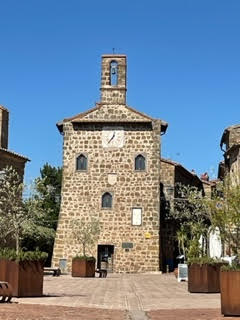
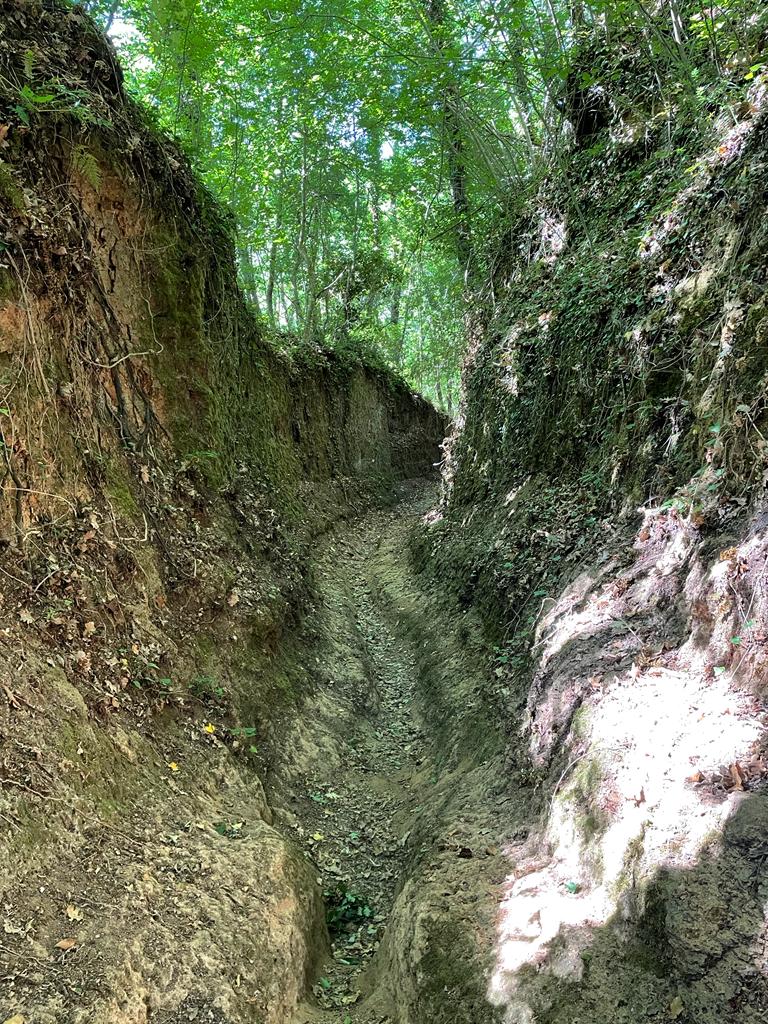
Photos from my recent nine-mile walk to a neighboring village and back. These Etruscan trails are the same as those beloved by Leah, protagonist of my Leah Contarini Mysteries Series of Italian mysteries from Level Best Books. The first book in the series, Bitter Maremma is available now from Amazon, Barnes and Noble, etc; the second book, Death Will Find You, will be out this fall; and the third book, tentatively titled Precarious Refuge, will appear in 2023.  

From a review of Bitter Maremma:

Author Siporin’s novel works on a couple of different levels, first, as a murder mystery—and a very good one at that—and second, as a paean to the Tuscan region, its customs, culture and its colorful residents, all of which are richly drawn by the author. A far cry from the usual noir-ish streets of New York or Los Angeles, Bitter Maremma is a highly entertaining read, one that I most certainly recommend.

–Gregory Stout, author of Lost Little Girl, Gideon’s Ghost, and Finalist in Best First PI Novel category, 2022 Shamus Awards.

The Cave of the Jews

10 May 2022

     Lower Tuscany. I’ve finished work on the second book in my Leah Contarini Mystery and am ready to send it to the press, happy to let them take over. 

 Today, for a break, I decided on research for the next book. S. and I drove the back roads of the thick forests on the border with Lazio, bumping over narrow dirt roads through the high hills. We were looking for the Grotto degli Ebrei, the “Cave of the Jews.”  This is the cave where our friend, Elena, and her family hid from the Germans during Germany’s occupation of Italy in World War II. Elena was 9 when, in November of 1943, she and her family, left their home and went west and north to the farm of gentile friends. Each month they moved to another farm, sometimes barely ahead of the Facists or the Germans, and finally ended in what came to be called the Cave of the Jews in the same forest where we drove today. 

     The forests of this area of Tuscany are like jungles: chestnut, oak, maple, hornbeams crowd each other, thick as grass, and the ground cover of tangled vines, thorny bushes, giant stands of Scotch Broom, overgrown wild roses, and wild raspberry bushes twist together in tight, impenetrable  knots. 

     Like some other local Jewish families fortunate enough to escape in time, Elena’s family was sustained by courageous peasants/farmers who put their lives on the line to protect Jewish families from the German soldiers combing the area to kill or round up Jews for the camps.  

     We stopped at a house deep in the hills and talked to a man who was eating lunch with his family. “The cave is difficult to find,” he explained. “I could take you, but I have to work on my tractor today. It’s hard to find.”

     So, today didn’t work out, but another day it might, and the story of that nine-year-old girl begins to take shape in my mind. 

On Travel

I’m on the verge of a long trip and now that my luggage is nearly packed, I’ve been looking for books to read along the journey. After searching my shelves, I’ve decided that since I’m a traveler I’ll read about traveling, but from a different era.  

 I’ve settled on writings from Medieval times:  Jewish Travellers in the Middle Ages: 19 Firsthand Accounts, edited by Elkan Nathan Adler; and The Travels of Ibn Battutah, edited by Tim Mackintosh-Smith. The books aren’t entirely new to me; I’ve read a few pages of each one, and I ended up choosing them for the chance to continue exploring the Middle Ages of Africa and Asia.

Ibn Battutah said, “Travelling – first it leaves you speechless, then turns you into a storyteller.” I’m excited to see what story I’m about to enter with these intrepid authors, and I’m anticipating how their travels will change my own.